Managing, Following, and Adjusting the Initial Plan
Learning Objectives
By the end of this section, you will be able to:
- Explain the difference between a business plan and a lean plan
- Know how to develop a lean plan quickly and accurately
- Run the build-measure-learn loop
View this section's JSON
{
  "id": "m71171",
  "doc_class": "",
  "title": "Managing, Following, and Adjusting the Initial Plan",
  "objectives": [
    "Explain the difference between a business plan and a lean plan",
    "Know how to develop a lean plan quickly and accurately",
    "Run the build-measure-learn loop"
  ],
  "figures": [
    {
      "src": "OSX_Eship_10_04_LeanPlan.jpg",
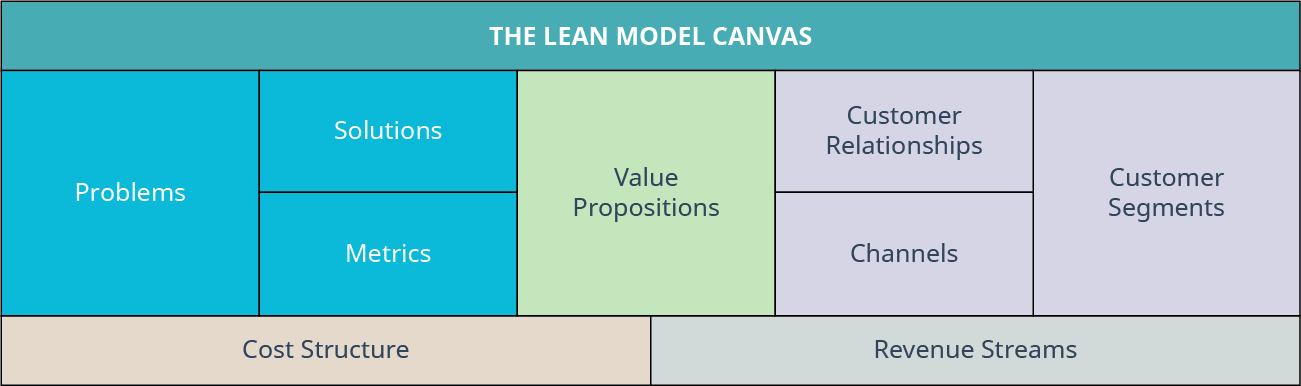
      "alt": "The lean model canvas includes problems, solutions, value propositions, customer relationships, customer segments, metrics, channels, cost structure, and revenue streams.",
      "caption": "The founders of a business create a lean plan to help them set expectations and goals. (attribution: Copyright Rice University, OpenStax, under CC BY NC-SA 4.0 license)"
    },
    {
      "src": "OSX_Eship_10_04_LeanWheel.jpg",
      "alt": "Lean Planning Cycle involves Run then Review then Revise then Plan then back to Run and then to BML (build, measure, learn).",
      "caption": "The lean plan cycle for small businesses. (attribution: Copyright Rice University, OpenStax, under CC BY NC-SA 4.0 license)"
    }
  ],
  "tokens": 3327,
  "blocks": [
    {
      "anchor": "m71171-b1",
      "trail": [
        "Learning Objectives"
      ],
      "heading": "Learning Objectives",
      "html": "<section class=\"learning-objectives\"><h2>Learning Objectives</h2><p>By the end of this section, you will be able to:</p><ul><li>Explain the difference between a business plan and a lean plan</li><li>Know how to develop a lean plan quickly and accurately</li><li>Run the build-measure-learn loop</li></ul></section>",
      "text": "Learning Objectives\nBy the end of this section, you will be able to:\nExplain the difference between a business plan and a lean plan\nKnow how to develop a lean plan quickly and accurately\nRun the build-measure-learn loop",
      "tokens": 54
    },
    {
      "anchor": "m71171-b2",
      "trail": [],
      "heading": null,
      "html": "<p>In this chapter, we’ve discussed how to start the imperfect business using the lean startup approach. We’ve looked at the build-measure-learn loop and how to test an MVP. We’ve also covered how to deal with fear of failure and how to overcome negative thinking. In addition, we’ve covered how minorities can tap into resources to help them be successful. Now it’s time to build the lean plan to help you launch your venture.</p><p>As you must realize, having a lean plan is important to executing its process. A <dfn>lean plan</dfn> follows the path of <dfn>lean methodology</dfn>. It is a brief business plan shown to potential investors and employees that is a fast and effective way to set, manage, and evaluate goals and strategies in a business.  shows its components.</p><p>Traditionally, a <dfn>business plan</dfn> requires a detailed document of the company’s background, the target, objectives, financials, and marketing strategies. Developing this usually takes a long time, from a few months to a year, as you will see in Business Model and Plan. A full business plan requires robust information as it’s developed for internal purposes, for banks or investors who need proof that the business is a good investment, and for other stakeholders. In contrast, a lean plan is short and includes only specific information, sufficient to go through the <dfn>build-measure-learn loop</dfn>. This plan is where you clarify initial ideas about the product to help you work through the loop and to share with potential investors and employees who need only so much information to decide on their role in the project.</p><figure><img src=\"media/OSX_Eship_10_04_LeanPlan.jpg\" alt=\"The lean model canvas includes problems, solutions, value propositions, customer relationships, customer segments, metrics, channels, cost structure, and revenue streams.\"><figcaption>The founders of a business create a lean plan to help them set expectations and goals. (attribution: Copyright Rice University, OpenStax, under CC BY NC-SA 4.0 license)</figcaption><span class=\"figure-alt\">The lean model canvas includes problems, solutions, value propositions, customer relationships, customer segments, metrics, channels, cost structure, and revenue streams.</span></figure>",
      "text": "In this chapter, we’ve discussed how to start the imperfect business using the lean startup approach. We’ve looked at the build-measure-learn loop and how to test an MVP. We’ve also covered how to deal with fear of failure and how to overcome negative thinking. In addition, we’ve covered how minorities can tap into resources to help them be successful. Now it’s time to build the lean plan to help you launch your venture.\nAs you must realize, having a lean plan is important to executing its process. A lean plan follows the path of lean methodology. It is a brief business plan shown to potential investors and employees that is a fast and effective way to set, manage, and evaluate goals and strategies in a business. shows its components.\nTraditionally, a business plan requires a detailed document of the company’s background, the target, objectives, financials, and marketing strategies. Developing this usually takes a long time, from a few months to a year, as you will see in Business Model and Plan. A full business plan requires robust information as it’s developed for internal purposes, for banks or investors who need proof that the business is a good investment, and for other stakeholders. In contrast, a lean plan is short and includes only specific information, sufficient to go through the build-measure-learn loop. This plan is where you clarify initial ideas about the product to help you work through the loop and to share with potential investors and employees who need only so much information to decide on their role in the project.\n [figure: The lean model canvas includes problems, solutions, value propositions, customer relationships, customer segments, metrics, channels, cost structure, and revenue streams.] The founders of a business create a lean plan to help them set expectations and goals. (attribution: Copyright Rice University, OpenStax, under CC BY NC-SA 4.0 license)\nThe lean model canvas includes problems, solutions, value propositions, customer relationships, customer segments, metrics, channels, cost structure, and revenue streams.",
      "tokens": 520
    },
    {
      "anchor": "m71171-b3",
      "trail": [
        "Developing a Lean Plan"
      ],
      "heading": "Developing a Lean Plan",
      "html": "<section class=\"\"><h2>Developing a Lean Plan</h2><p>As mentioned earlier, a lean plan uses lean methodology. This type of planning begins by drafting a short living set of lists to guide you, meaning you can update it as you go.<sup class=\"footnote-ref\"><a id=\"fnref1\" href=\"#fn1\" aria-label=\"Footnote 1\">1</a></sup> The plan shouldn’t take months to develop; you can set it up in a few days. The plan focuses on the business core, so only important details about marketing, the business model, finances, the build-measure-learn loop, and the <dfn>MVP</dfn> are added to it.<sup class=\"footnote-ref\"><a id=\"fnref2\" href=\"#fn2\" aria-label=\"Footnote 2\">2</a></sup></p><p>The following is a list of basic procedures and details to include in a lean plan.</p><ol><li>Write a short and simple document.</li><li>Test your MVP through the build-measure-learn loop.</li><li>Review your results.</li><li>Revise your plan.</li></ol><p>Once these steps are complete, the entrepreneur can start or continue the venture.</p><section class=\"\"><h3>Write a Short and Simple Document</h3><p>This plan does not need to include an executive summary, a company background, or team information. It is literally a short pitch that you can use to share with investors and potential partners. Focus on what is important and include the following:</p><ul><li>Basic strategies for product, price, place, promotion; add people, physical environment, and process if it is a service</li><li>Basic strategies for target market and positioning</li><li>Day-to-day tactics, which include specific tasks or actions that will get an objective done</li><li>A schedule with dates for acquiring needed licenses, launch date, and when to review and revise the plan</li><li>A business model that details how you will make money</li><li>A basic forecast of sales, costs, profit, and break-even analysis</li></ul><p>This plan is just a bare bones list of things that need to get done and by whom. It also includes a timeline, a cost, and a reward. It is less like a traditional document and more a series of lists and bullet points. In this case, the entrepreneur is only writing down the essentials of the business to achieve the goal at hand. Later on, when a document is needed for outside stakeholders or bank loans, then a full plan can be developed with research and details about the market, the environment, trends, and strategies that are more fleshed out.</p><p>For example, an entrepreneur who is just opening a prosthetics company can start a lean plan by describing its main product, which can focus on creating custom prosthetics for children. Then it can add a basic price or range of prices for its basic product since it’s a custom product, and it will probably vary in price from customer to customer. Another strategy to keep in the plan is where to conduct the business. A central location would probably be a good idea, especially close to doctors and hospitals. Finally, basic promotional strategies used in reaching out to this market, which can include speaking to children’s hospitals and local doctors who can refer the patients to the company, can also be listed. In addition, the entrepreneur may decide to create a basic website, online ads, and simple brochures to give information to potential customers. Once all the strategies are laid out, then the timelines can be added from the inception until the launch date, which includes assignments for everyone who will be in charge of the activities in this new business. These can include an office manager, the prosthetist, and a marketer.</p><p>Next, the entrepreneur may detail how the money will be made. Will the new business charge the client directly for the product? How about accepting insurance and copayments? These are questions that need to be written down. Then a basic forecast of the market demand will help forecast sales, expenses, and profit.</p></section><section class=\"\"><h3>Test Your MVP through the Build-Measure-Learn Loop</h3><p>Once the <dfn>lean plan</dfn> has been put into place, the next step is to execute it and test the MVP through the build-measure-learn loop. Here is where the rubber will meet the road, and all the assumptions that were made in the plan will be tested in real life.</p><ul><li>Build your MVP.</li><li>Test your idea by sharing it with potential customers.</li><li>Measure results by talking to customers and recording feedback.</li><li>Ask questions such as: Are we building a product people want? What benefits do we need to add? Is this our target market?</li><li>Test different versions and cohorts of users.</li></ul><p>In our example, the entrepreneur will have a chance to build the prosthetics and ask questions that will help create a better product over time. At this time, the entrepreneur might find out that the product can be expanded to include orthotics and not just prosthetics, and perhaps that adults can also be included in the market.</p></section><section class=\"\"><h3>Review Your Results</h3><p>This step should be done at least once a month, where customer feedback, marketing, and outcomes are thoroughly reviewed. This is a great opportunity for the entrepreneur to assess if goals have been met and identify areas for improvement. However, many times, you will encounter that reviewing results can stir resistance from employees (if there are any), as they may become tired of planning, having meetings about planning, and demonstrating results. The reviewing process can inspire some fear or negative feelings over concerns of being blamed, but as a leader, you must always assure them that this process helps them get better at what they do and gives them the information and tools necessary to make the changes that will steer the business onto a more successful path. This is about managing the results and not being deterred by them.</p><ul><li>Review customer feedback and go back to your plan to compare.</li><li>Review target market, 7Ps of marketing, features, and benefits.</li><li>Review numbers or outcomes, which may include sales, profit, customer signups, and even customer reactions to advertisements and product attributes.</li></ul><p>In our example, if the prosthetics business is not bringing in enough customers to sustain it, then this is the opportunity to see where issues exist so changes can be made to the lean plan.</p><aside class=\"note note-are-you-ready\"><p class=\"note-label\">A Lean Scooter Plan</p><p>You are interested in opening a new electric scooter business in your small city, as there is no competition. You would like to enable your small town to have smart mobility that is environmentally conscious while reducing dependence on regular transportation such as buses and vehicles.</p><ul><li>Create a lean plan that details how you plan to start your business.</li></ul></aside></section><section class=\"\"><h3>Revise the Plan</h3><p>Make changes to the plan as needed. Once metrics have been measured against results, marketing is tested and measured, and customer feedback is received, then it is time to revise the plan and make adjustments. This can take the form of adding a feature to the product, adding new products, changing promotional tactics, or communicating differently with customers and consultants.</p><p>If there aren’t enough customers to sustain the prosthetic business, here is where the founders can make changes to correct course. It may be that customers are not aware of the business, or there aren’t enough pediatric customers and perhaps adults can be added to the target market. Once the plan is revised and the resulting changes are made, the business can continue and the process of testing restarts. As you can see in , this is a continuous process. It requires constant updating and cooperation from everyone involved in the business. Once the process is set up, then it is easier to maintain it and see it as necessary within the business that helps it grow.</p><figure><img src=\"media/OSX_Eship_10_04_LeanWheel.jpg\" alt=\"Lean Planning Cycle involves Run then Review then Revise then Plan then back to Run and then to BML (build, measure, learn).\"><figcaption>The lean plan cycle for small businesses. (attribution: Copyright Rice University, OpenStax, under CC BY NC-SA 4.0 license)</figcaption><span class=\"figure-alt\">Lean Planning Cycle involves Run then Review then Revise then Plan then back to Run and then to BML (build, measure, learn).</span></figure><p>Tim <dfn>Berry</dfn>—entrepreneur, former <dfn>Apple</dfn> employee, writer, and now a lean startup guru—advises businesses on the art of lean planning, as he does not like long planning himself and has little patience for extensive plans and coding. For Berry, lean planning does not contain elaborate information and details that are unnecessary for the business to run. It is not a document per se, but an assortment of short bullet points, some lists, and tables. For Berry, the most important steps to lean planning are to have the following:</p><ol><li>A lean strategy or plan in place</li><li>Execution of the plan (or run it like in the )</li><li>Review of the results and check against milestones</li><li>Revision of the plan—change what didn’t work and start the whole process again<sup class=\"footnote-ref\"><a id=\"fnref3\" href=\"#fn3\" aria-label=\"Footnote 3\">3</a></sup></li></ol><aside class=\"note note-are-you-ready\"><p class=\"note-label\">Developing a Lean Plan</p><p>A local entrepreneur owns a print shop that has been in business for 20 years. The owner focuses mainly on printing business cards, flyers, posters, brochures, and banners for local businesses. They have noticed that sales have been declining for the past five years because promotions have been evolving into digital ads, social media, and other Internet marketing techniques rather than printed material. They will need to innovate if they want to stay in business.</p><p>Last week, the owner came to see one of your entrepreneurship professors to ask for a student or someone to help. Since you aced the class, your professor thinks that you can show the owner how to develop a lean plan, and they offer you an internship. You accept gladly and begin to work on the project.</p><ul><li>Develop a lean plan and explain to the owner how this can help them grow in the next three years.</li></ul></aside></section></section>",
      "text": "Developing a Lean Plan\nAs mentioned earlier, a lean plan uses lean methodology. This type of planning begins by drafting a short living set of lists to guide you, meaning you can update it as you go.1 The plan shouldn’t take months to develop; you can set it up in a few days. The plan focuses on the business core, so only important details about marketing, the business model, finances, the build-measure-learn loop, and the MVP are added to it.2\nThe following is a list of basic procedures and details to include in a lean plan.\nWrite a short and simple document.\nTest your MVP through the build-measure-learn loop.\nReview your results.\nRevise your plan.\nOnce these steps are complete, the entrepreneur can start or continue the venture.\nWrite a Short and Simple Document\nThis plan does not need to include an executive summary, a company background, or team information. It is literally a short pitch that you can use to share with investors and potential partners. Focus on what is important and include the following:\nBasic strategies for product, price, place, promotion; add people, physical environment, and process if it is a service\nBasic strategies for target market and positioning\nDay-to-day tactics, which include specific tasks or actions that will get an objective done\nA schedule with dates for acquiring needed licenses, launch date, and when to review and revise the plan\nA business model that details how you will make money\nA basic forecast of sales, costs, profit, and break-even analysis\nThis plan is just a bare bones list of things that need to get done and by whom. It also includes a timeline, a cost, and a reward. It is less like a traditional document and more a series of lists and bullet points. In this case, the entrepreneur is only writing down the essentials of the business to achieve the goal at hand. Later on, when a document is needed for outside stakeholders or bank loans, then a full plan can be developed with research and details about the market, the environment, trends, and strategies that are more fleshed out.\nFor example, an entrepreneur who is just opening a prosthetics company can start a lean plan by describing its main product, which can focus on creating custom prosthetics for children. Then it can add a basic price or range of prices for its basic product since it’s a custom product, and it will probably vary in price from customer to customer. Another strategy to keep in the plan is where to conduct the business. A central location would probably be a good idea, especially close to doctors and hospitals. Finally, basic promotional strategies used in reaching out to this market, which can include speaking to children’s hospitals and local doctors who can refer the patients to the company, can also be listed. In addition, the entrepreneur may decide to create a basic website, online ads, and simple brochures to give information to potential customers. Once all the strategies are laid out, then the timelines can be added from the inception until the launch date, which includes assignments for everyone who will be in charge of the activities in this new business. These can include an office manager, the prosthetist, and a marketer.\nNext, the entrepreneur may detail how the money will be made. Will the new business charge the client directly for the product? How about accepting insurance and copayments? These are questions that need to be written down. Then a basic forecast of the market demand will help forecast sales, expenses, and profit.\nTest Your MVP through the Build-Measure-Learn Loop\nOnce the lean plan has been put into place, the next step is to execute it and test the MVP through the build-measure-learn loop. Here is where the rubber will meet the road, and all the assumptions that were made in the plan will be tested in real life.\nBuild your MVP.\nTest your idea by sharing it with potential customers.\nMeasure results by talking to customers and recording feedback.\nAsk questions such as: Are we building a product people want? What benefits do we need to add? Is this our target market?\nTest different versions and cohorts of users.\nIn our example, the entrepreneur will have a chance to build the prosthetics and ask questions that will help create a better product over time. At this time, the entrepreneur might find out that the product can be expanded to include orthotics and not just prosthetics, and perhaps that adults can also be included in the market.\nReview Your Results\nThis step should be done at least once a month, where customer feedback, marketing, and outcomes are thoroughly reviewed. This is a great opportunity for the entrepreneur to assess if goals have been met and identify areas for improvement. However, many times, you will encounter that reviewing results can stir resistance from employees (if there are any), as they may become tired of planning, having meetings about planning, and demonstrating results. The reviewing process can inspire some fear or negative feelings over concerns of being blamed, but as a leader, you must always assure them that this process helps them get better at what they do and gives them the information and tools necessary to make the changes that will steer the business onto a more successful path. This is about managing the results and not being deterred by them.\nReview customer feedback and go back to your plan to compare.\nReview target market, 7Ps of marketing, features, and benefits.\nReview numbers or outcomes, which may include sales, profit, customer signups, and even customer reactions to advertisements and product attributes.\nIn our example, if the prosthetics business is not bringing in enough customers to sustain it, then this is the opportunity to see where issues exist so changes can be made to the lean plan.\nA Lean Scooter Plan\nYou are interested in opening a new electric scooter business in your small city, as there is no competition. You would like to enable your small town to have smart mobility that is environmentally conscious while reducing dependence on regular transportation such as buses and vehicles.\nCreate a lean plan that details how you plan to start your business.\n\nRevise the Plan\nMake changes to the plan as needed. Once metrics have been measured against results, marketing is tested and measured, and customer feedback is received, then it is time to revise the plan and make adjustments. This can take the form of adding a feature to the product, adding new products, changing promotional tactics, or communicating differently with customers and consultants.\nIf there aren’t enough customers to sustain the prosthetic business, here is where the founders can make changes to correct course. It may be that customers are not aware of the business, or there aren’t enough pediatric customers and perhaps adults can be added to the target market. Once the plan is revised and the resulting changes are made, the business can continue and the process of testing restarts. As you can see in , this is a continuous process. It requires constant updating and cooperation from everyone involved in the business. Once the process is set up, then it is easier to maintain it and see it as necessary within the business that helps it grow.\n [figure: Lean Planning Cycle involves Run then Review then Revise then Plan then back to Run and then to BML (build, measure, learn).] The lean plan cycle for small businesses. (attribution: Copyright Rice University, OpenStax, under CC BY NC-SA 4.0 license)\nLean Planning Cycle involves Run then Review then Revise then Plan then back to Run and then to BML (build, measure, learn).Tim Berry—entrepreneur, former Apple employee, writer, and now a lean startup guru—advises businesses on the art of lean planning, as he does not like long planning himself and has little patience for extensive plans and coding. For Berry, lean planning does not contain elaborate information and details that are unnecessary for the business to run. It is not a document per se, but an assortment of short bullet points, some lists, and tables. For Berry, the most important steps to lean planning are to have the following:\nA lean strategy or plan in place\nExecution of the plan (or run it like in the )\nReview of the results and check against milestones\nRevision of the plan—change what didn’t work and start the whole process again3\nDeveloping a Lean Plan\nA local entrepreneur owns a print shop that has been in business for 20 years. The owner focuses mainly on printing business cards, flyers, posters, brochures, and banners for local businesses. They have noticed that sales have been declining for the past five years because promotions have been evolving into digital ads, social media, and other Internet marketing techniques rather than printed material. They will need to innovate if they want to stay in business.\nLast week, the owner came to see one of your entrepreneurship professors to ask for a student or someone to help. Since you aced the class, your professor thinks that you can show the owner how to develop a lean plan, and they offer you an internship. You accept gladly and begin to work on the project.\nDevelop a lean plan and explain to the owner how this can help them grow in the next three years.",
      "tokens": 2314
    },
    {
      "anchor": "m71171-b4",
      "trail": [
        "Summary"
      ],
      "heading": "Summary",
      "html": "<section class=\"section-summary\"><h2>Summary</h2><p>Having a lean plan is helpful in setting up expectations and measurements. This is a living document, so its creation and updating are a process. The process starts with building a short document that outlines the basics of product, market, and strategies, with a short schedule of tasks. After a trial run, where the prototype or actual product is tested with customers, the plan is reviewed and revised to incorporate the feedback.</p></section>",
      "text": "Summary\nHaving a lean plan is helpful in setting up expectations and measurements. This is a living document, so its creation and updating are a process. The process starts with building a short document that outlines the basics of product, market, and strategies, with a short schedule of tasks. After a trial run, where the prototype or actual product is tested with customers, the plan is reviewed and revised to incorporate the feedback.",
      "tokens": 110
    },
    {
      "anchor": "m71171-b5",
      "trail": [
        "Review Questions"
      ],
      "heading": "Review Questions",
      "html": "<section class=\"review-questions\"><h2>Review Questions</h2><div class=\"exercise\"><div class=\"problem\"><p>What is a lean plan and what are its components?</p></div></div><div class=\"exercise\"><div class=\"problem\"><p>What are some of the items or sections that do not have to be included in a lean plan?</p></div></div></section>",
      "text": "Review Questions\nWhat is a lean plan and what are its components?\nWhat are some of the items or sections that do not have to be included in a lean plan?",
      "tokens": 38
    },
    {
      "anchor": "m71171-b6",
      "trail": [
        "Discussion Questions"
      ],
      "heading": "Discussion Questions",
      "html": "<section class=\"discussion-questions\"><h2>Discussion Questions</h2><div class=\"exercise\"><div class=\"problem\"><p>Discuss how a lean plan allows you the flexibility to change course if something is not working for your business.</p></div></div></section>",
      "text": "Discussion Questions\nDiscuss how a lean plan allows you the flexibility to change course if something is not working for your business.",
      "tokens": 33
    },
    {
      "anchor": "m71171-b7",
      "trail": [
        "Case Questions"
      ],
      "heading": "Case Questions",
      "html": "<section class=\"case-questions\"><h2>Case Questions</h2><div class=\"exercise\"><div class=\"problem\"><p>You and a team of students from your university are interested in creating a virtual agent (chatbot) that can interact with humans online. You have noticed that small businesses could benefit from adding a chatbot to provide great customer service at all times of the day at a fraction of the cost. Your goal is to create chatbots for a few industries that are very customer-service intensive (realtors, restaurants, doctors’ offices, etc.), and you think you can come up with a product that can be sold to small- or medium-sized businesses. One of your team members who is a computer science major has already starting coding the first program, but you know very well that you will need lean planning to get your ideas down in writing and to pitch it to a few investors. Develop your 7Ps for one of the chatbots in bullet point format and include the target market, the positioning, and the business model that you would use to make money.</p></div></div></section>",
      "text": "Case Questions\nYou and a team of students from your university are interested in creating a virtual agent (chatbot) that can interact with humans online. You have noticed that small businesses could benefit from adding a chatbot to provide great customer service at all times of the day at a fraction of the cost. Your goal is to create chatbots for a few industries that are very customer-service intensive (realtors, restaurants, doctors’ offices, etc.), and you think you can come up with a product that can be sold to small- or medium-sized businesses. One of your team members who is a computer science major has already starting coding the first program, but you know very well that you will need lean planning to get your ideas down in writing and to pitch it to a few investors. Develop your 7Ps for one of the chatbots in bullet point format and include the target market, the positioning, and the business model that you would use to make money.",
      "tokens": 238
    },
    {
      "anchor": "m71171-b8",
      "trail": [
        "Suggested Resources"
      ],
      "heading": "Suggested Resources",
      "html": "<section class=\"suggested-resources\"><h2>Suggested Resources</h2><p>Tim Berry’s Lean Business Planning Guide: https://leanplan.com/</p></section>",
      "text": "Suggested Resources\nTim Berry’s Lean Business Planning Guide: https://leanplan.com/",
      "tokens": 20
    }
  ],
  "footnotes": [
    {
      "id": "fn1",
      "html": "Tim Berry. “Business Planning for the ‘Lean Startup.’ ” <em>Entrepreneur</em>. September 22, 2010. https://www.entrepreneur.com/article/217343"
    },
    {
      "id": "fn2",
      "html": "Noah Parsons. “An Introduction to Lean Planning.” <em>LivePlan</em>. July 13, 2017. https://www.liveplan.com/blog/2017/07/an-introduction-to-lean-planning/"
    },
    {
      "id": "fn3",
      "html": "Tim Berry. “Lean Business Planning Guide.” <em>Lean Business Planning</em>. https://leanplan.com/"
    }
  ],
  "kind": "section",
  "chapter": 10,
  "number": "10.4"
}
In this chapter, we’ve discussed how to start the imperfect business using the lean startup approach. We’ve looked at the build-measure-learn loop and how to test an MVP. We’ve also covered how to deal with fear of failure and how to overcome negative thinking. In addition, we’ve covered how minorities can tap into resources to help them be successful. Now it’s time to build the lean plan to help you launch your venture.
As you must realize, having a lean plan is important to executing its process. A lean plan follows the path of lean methodology. It is a brief business plan shown to potential investors and employees that is a fast and effective way to set, manage, and evaluate goals and strategies in a business. shows its components.
Traditionally, a business plan requires a detailed document of the company’s background, the target, objectives, financials, and marketing strategies. Developing this usually takes a long time, from a few months to a year, as you will see in Business Model and Plan. A full business plan requires robust information as it’s developed for internal purposes, for banks or investors who need proof that the business is a good investment, and for other stakeholders. In contrast, a lean plan is short and includes only specific information, sufficient to go through the build-measure-learn loop. This plan is where you clarify initial ideas about the product to help you work through the loop and to share with potential investors and employees who need only so much information to decide on their role in the project.
Developing a Lean Plan
As mentioned earlier, a lean plan uses lean methodology. This type of planning begins by drafting a short living set of lists to guide you, meaning you can update it as you go.1 The plan shouldn’t take months to develop; you can set it up in a few days. The plan focuses on the business core, so only important details about marketing, the business model, finances, the build-measure-learn loop, and the MVP are added to it.2
The following is a list of basic procedures and details to include in a lean plan.
- Write a short and simple document.
- Test your MVP through the build-measure-learn loop.
- Review your results.
- Revise your plan.
Once these steps are complete, the entrepreneur can start or continue the venture.
Write a Short and Simple Document
This plan does not need to include an executive summary, a company background, or team information. It is literally a short pitch that you can use to share with investors and potential partners. Focus on what is important and include the following:
- Basic strategies for product, price, place, promotion; add people, physical environment, and process if it is a service
- Basic strategies for target market and positioning
- Day-to-day tactics, which include specific tasks or actions that will get an objective done
- A schedule with dates for acquiring needed licenses, launch date, and when to review and revise the plan
- A business model that details how you will make money
- A basic forecast of sales, costs, profit, and break-even analysis
This plan is just a bare bones list of things that need to get done and by whom. It also includes a timeline, a cost, and a reward. It is less like a traditional document and more a series of lists and bullet points. In this case, the entrepreneur is only writing down the essentials of the business to achieve the goal at hand. Later on, when a document is needed for outside stakeholders or bank loans, then a full plan can be developed with research and details about the market, the environment, trends, and strategies that are more fleshed out.
For example, an entrepreneur who is just opening a prosthetics company can start a lean plan by describing its main product, which can focus on creating custom prosthetics for children. Then it can add a basic price or range of prices for its basic product since it’s a custom product, and it will probably vary in price from customer to customer. Another strategy to keep in the plan is where to conduct the business. A central location would probably be a good idea, especially close to doctors and hospitals. Finally, basic promotional strategies used in reaching out to this market, which can include speaking to children’s hospitals and local doctors who can refer the patients to the company, can also be listed. In addition, the entrepreneur may decide to create a basic website, online ads, and simple brochures to give information to potential customers. Once all the strategies are laid out, then the timelines can be added from the inception until the launch date, which includes assignments for everyone who will be in charge of the activities in this new business. These can include an office manager, the prosthetist, and a marketer.
Next, the entrepreneur may detail how the money will be made. Will the new business charge the client directly for the product? How about accepting insurance and copayments? These are questions that need to be written down. Then a basic forecast of the market demand will help forecast sales, expenses, and profit.
Test Your MVP through the Build-Measure-Learn Loop
Once the lean plan has been put into place, the next step is to execute it and test the MVP through the build-measure-learn loop. Here is where the rubber will meet the road, and all the assumptions that were made in the plan will be tested in real life.
- Build your MVP.
- Test your idea by sharing it with potential customers.
- Measure results by talking to customers and recording feedback.
- Ask questions such as: Are we building a product people want? What benefits do we need to add? Is this our target market?
- Test different versions and cohorts of users.
In our example, the entrepreneur will have a chance to build the prosthetics and ask questions that will help create a better product over time. At this time, the entrepreneur might find out that the product can be expanded to include orthotics and not just prosthetics, and perhaps that adults can also be included in the market.
Review Your Results
This step should be done at least once a month, where customer feedback, marketing, and outcomes are thoroughly reviewed. This is a great opportunity for the entrepreneur to assess if goals have been met and identify areas for improvement. However, many times, you will encounter that reviewing results can stir resistance from employees (if there are any), as they may become tired of planning, having meetings about planning, and demonstrating results. The reviewing process can inspire some fear or negative feelings over concerns of being blamed, but as a leader, you must always assure them that this process helps them get better at what they do and gives them the information and tools necessary to make the changes that will steer the business onto a more successful path. This is about managing the results and not being deterred by them.
- Review customer feedback and go back to your plan to compare.
- Review target market, 7Ps of marketing, features, and benefits.
- Review numbers or outcomes, which may include sales, profit, customer signups, and even customer reactions to advertisements and product attributes.
In our example, if the prosthetics business is not bringing in enough customers to sustain it, then this is the opportunity to see where issues exist so changes can be made to the lean plan.
Revise the Plan
Make changes to the plan as needed. Once metrics have been measured against results, marketing is tested and measured, and customer feedback is received, then it is time to revise the plan and make adjustments. This can take the form of adding a feature to the product, adding new products, changing promotional tactics, or communicating differently with customers and consultants.
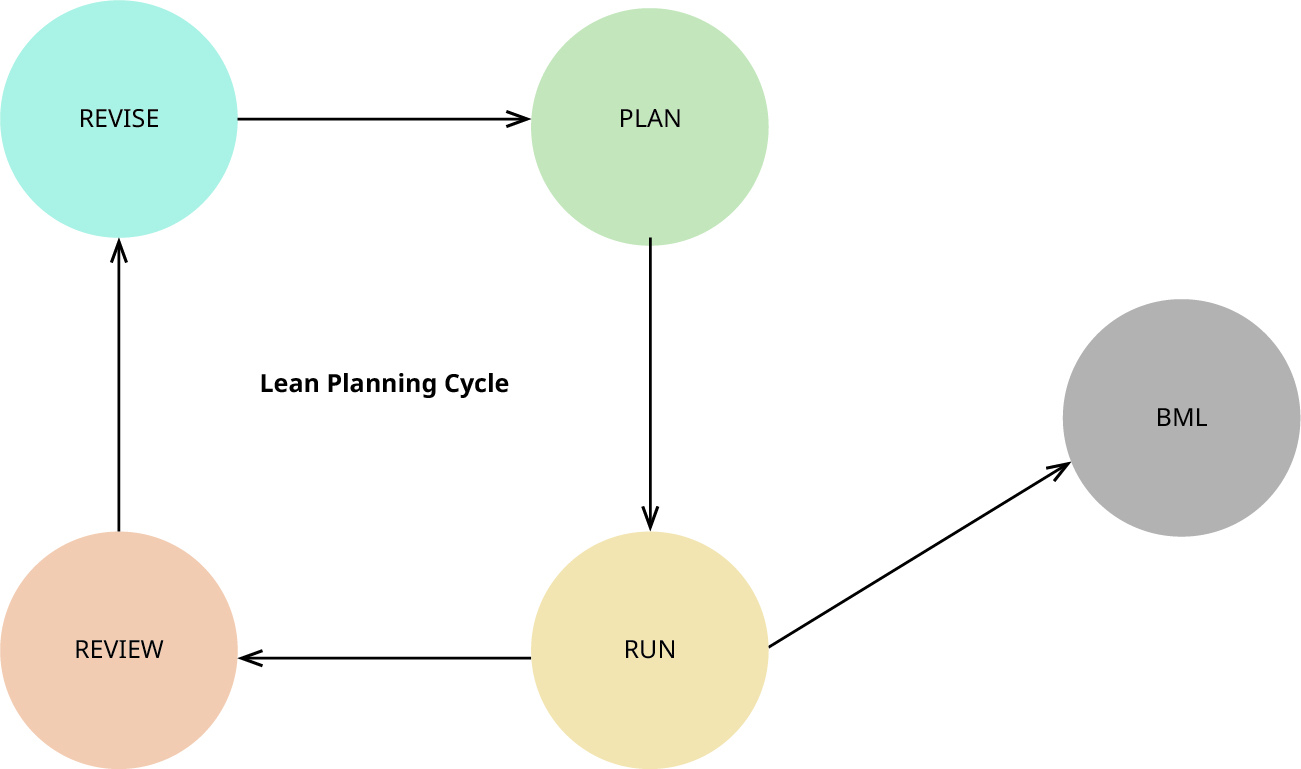
If there aren’t enough customers to sustain the prosthetic business, here is where the founders can make changes to correct course. It may be that customers are not aware of the business, or there aren’t enough pediatric customers and perhaps adults can be added to the target market. Once the plan is revised and the resulting changes are made, the business can continue and the process of testing restarts. As you can see in , this is a continuous process. It requires constant updating and cooperation from everyone involved in the business. Once the process is set up, then it is easier to maintain it and see it as necessary within the business that helps it grow.
Tim Berry—entrepreneur, former Apple employee, writer, and now a lean startup guru—advises businesses on the art of lean planning, as he does not like long planning himself and has little patience for extensive plans and coding. For Berry, lean planning does not contain elaborate information and details that are unnecessary for the business to run. It is not a document per se, but an assortment of short bullet points, some lists, and tables. For Berry, the most important steps to lean planning are to have the following:
- A lean strategy or plan in place
- Execution of the plan (or run it like in the )
- Review of the results and check against milestones
- Revision of the plan—change what didn’t work and start the whole process again3
Summary
Having a lean plan is helpful in setting up expectations and measurements. This is a living document, so its creation and updating are a process. The process starts with building a short document that outlines the basics of product, market, and strategies, with a short schedule of tasks. After a trial run, where the prototype or actual product is tested with customers, the plan is reviewed and revised to incorporate the feedback.
Review Questions
What is a lean plan and what are its components?
What are some of the items or sections that do not have to be included in a lean plan?
Discussion Questions
Discuss how a lean plan allows you the flexibility to change course if something is not working for your business.
Case Questions
You and a team of students from your university are interested in creating a virtual agent (chatbot) that can interact with humans online. You have noticed that small businesses could benefit from adding a chatbot to provide great customer service at all times of the day at a fraction of the cost. Your goal is to create chatbots for a few industries that are very customer-service intensive (realtors, restaurants, doctors’ offices, etc.), and you think you can come up with a product that can be sold to small- or medium-sized businesses. One of your team members who is a computer science major has already starting coding the first program, but you know very well that you will need lean planning to get your ideas down in writing and to pitch it to a few investors. Develop your 7Ps for one of the chatbots in bullet point format and include the target market, the positioning, and the business model that you would use to make money.
Suggested Resources
Tim Berry’s Lean Business Planning Guide: https://leanplan.com/
Footnotes
- Tim Berry. “Business Planning for the ‘Lean Startup.’ ” Entrepreneur. September 22, 2010. https://www.entrepreneur.com/article/217343 ↩
- Noah Parsons. “An Introduction to Lean Planning.” LivePlan. July 13, 2017. https://www.liveplan.com/blog/2017/07/an-introduction-to-lean-planning/ ↩
- Tim Berry. “Lean Business Planning Guide.” Lean Business Planning. https://leanplan.com/ ↩